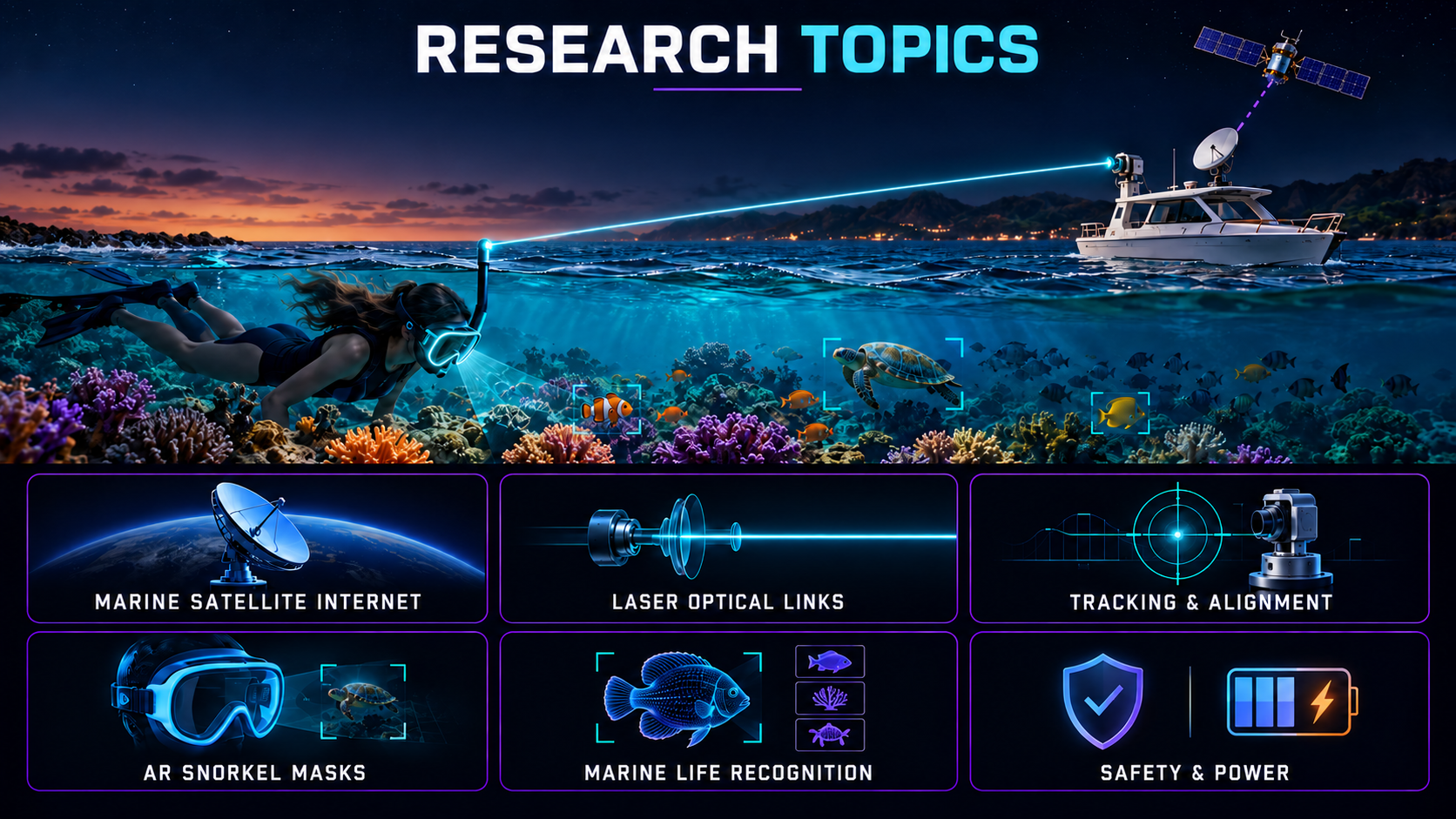
This evolving research page explores the technologies and open questions behind the Snorkel.tel idea: could a snorkeler receive live information through an augmented-reality mask using a line-of-sight optical laser connection to a satellite-connected boat?
The visual at the top links directly to the six research sections below. Its system illustration is speculative; the complete proposed configuration is not presented here as an existing commercial product.
Marine Satellite Internet
Research how vessels receive satellite internet, including marine antennas, coverage, bandwidth, latency, weather effects, equipment size, and power requirements. How would the boat relay useful information to a snorkeler?
Read more in the Research Library: Marine Satellite Internet.
Laser Optical Links
Investigate free-space optical communication between a boat and an above-water receiver on a snorkel tip. Important questions include beam direction, signal encoding, range, beam divergence, spray, mist, glare, and intermittent obstruction. This link is through air; it is not a radio connection from boat to snorkel.
Read more in the Research Library: Free-Space Optical Communication.
Tracking & Alignment
Both a boat and a surface swimmer move with waves. How could an optical terminal track a small moving receiver, acquire the link again when it is interrupted, and handle multiple snorkelers? What tracking precision is realistic?
Read more in the Research Library: Optical Tracking & Alignment.
AR Snorkel Masks
Study mask displays, optical transparency, readability, comfort, waterproof electronics, and the connection from the exposed snorkel receiver to a mask. Any proposed modification must preserve safe breathing and clear vision.
Read more in the Research Library: Augmented-Reality Displays.
Marine Life Recognition
Explore cameras, computer vision, and reference databases for recognizing fish, coral, and other underwater subjects. Consider uncertainty, regional species differences, reliable identification, and how to present information without distracting from the real environment.
Read more in the Research Library: Computer Vision & Marine-Life Identification.
Safety & Power
Examine laser eye safety, effects on people and wildlife, saltwater sealing, battery safety, equipment failures, and the risks of adding hardware to snorkeling equipment. A concept illustration does not establish that these challenges have been solved.
Read more in the Research Library: Marine Electronics & Optical Safety.
Research Notes and Updates
This is an evolving research agenda. Future articles and videos can document particular papers, patents, prototypes, manufacturers, and developments, identifying what is verified and what remains speculative.